
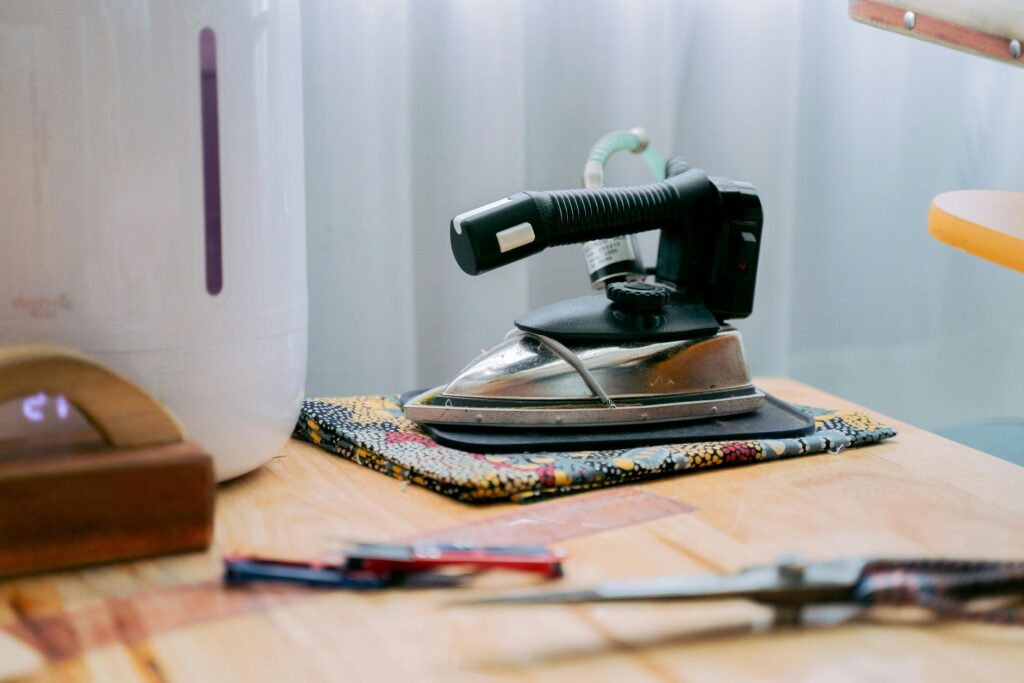
Fusing Machine in the Garment Industry
The fusing machine is typically used in the interlining process, where a thin layer of fusible material (often a type of fabric or film coated with adhesive) is fused onto the garment’s fabric. This interlining helps in enhancing the garment’s shape, durability, and overall finish.
In the garment industry, a fusing machine plays a crucial role in bonding fabrics, usually for adding structure or stiffness to certain areas of garments like collars, cuffs, waistbands, and lapels. This machine uses heat, pressure, and sometimes moisture to apply fusible interlining (a material that bonds to fabric) to a garment to provide stability, support, and shape.
Key Types of Fusing Machines:
- Hand Iron : Use a hand iron for fusing.
- Flat Bed Fusing Machine:
- The most common type used in garment production.
- A flat bed is where the garment parts are placed, and the fusing process takes place by pressing the interlining against the fabric using heat and pressure.
- Continuous Fusing Machine:
- A belt-driven machine where fabric and interlining pass through a heated chamber or roller, creating a continuous bonding process.
- Ideal for large-scale, high-speed production.
- High Frequency Fusing Machine:
- Utilizes vacuum pressure to ensure the interlining adheres perfectly to the fabric without wrinkles or defects.
Hand Iron : A hand fusing iron, also known as a handheld fusing iron or fusing press iron, is a smaller, portable tool used to apply heat and pressure for bonding fusible interlining to fabric, especially in small-scale garment production, repairs, or craftwork. Unlike industrial fusing machines that are used for high-volume production, a hand fusing iron is more suited for personal use, small batches, or sample-making in a workshop.
Flat Bed Fusing Machine:- A Flat Bed Fusing Machine is a type of industrial fusing machine used in garment manufacturing to bond fusible interlining to fabric. This machine is commonly employed for small- to medium-scale production, especially when a high-quality finish is required. It is particularly popular for fusing delicate or fine fabrics, such as those used in shirts, suits, and jackets, where precise control over heat, pressure, and time is necessary.
Key Features of a Flat Bed Fusing Machine:
- Flat Bed Design:
- As the name suggests, the machine has a flat bed where the fabric and fusible interlining are placed. This flat surface provides a stable base for even heat and pressure distribution during the fusing process.
- Heat and Pressure Application:
- The flat bed applies both heat (from heating plates or a heated surface) and pressure (using pneumatic or hydraulic systems) to bond the fusible interlining to the fabric.
- Variable Temperature Control:
- Flat bed fusing machines have adjustable temperature settings, allowing operators to fine-tune the heat for different types of fabrics and interlinings to prevent damage to delicate materials.
- Manual or Automatic Operation:
- Some flat bed fusing machines are manual, where the operator has to place and press the fabric manually, while others are automatic, where the machine controls the pressing time, pressure, and temperature automatically.
- Short to Medium Cycle Time:
- The machine has a relatively fast cycle time compared to manual fusing methods, but it is slower than continuous fusing machines. It is ideal for production runs that require high-quality fusing but not in extremely high volumes.
- Fusible Interlining Compatibility:
- These machines can work with a variety of fusible interlining materials, including woven, non-woven, and knit interlinings. The interlining is placed between the fabric layers to provide added structure, support, and stability.
- High Precision:
- The flat bed ensures even distribution of heat and pressure, reducing the likelihood of wrinkles, uneven fusing, or fabric damage. It’s highly suited for garments that require fine detailing, like tailored shirts or jackets.
How the Flat Bed Fusing Machine Works:
- Preparation:
- The fabric part (e.g., a collar or cuff) and fusible interlining are carefully aligned on the flat bed. The interlining is placed with the adhesive side facing the fabric.
- Setting the Parameters:
- The operator sets the appropriate temperature, pressure, and time on the machine, depending on the fabric and interlining used. Each type of fabric requires a specific setting to avoid damage and ensure optimal bonding.
- Placing the Fabric:
- The fabric and interlining are placed on the flat bed in a stable position, ensuring the interlining aligns properly with the fabric.
- Pressing and Fusing:
- The upper platen (pressing surface) comes down, applying heat and pressure to the fabric and interlining. This allows the adhesive on the interlining to melt and bond securely with the fabric. The amount of pressure and the duration of pressing can vary based on the fabric type.
- Cooling:
- After the pressing process, the fabric is allowed to cool for a few seconds to allow the adhesive to solidify, ensuring a strong bond.
- Inspection:
- The fused fabric is inspected for uniform bonding, absence of wrinkles, or defects in the interlining application.
Advantages of a Flat Bed Fusing Machine:
- High-Quality Finish:
- The flat bed ensures uniform pressure and heat distribution, providing high-quality results with minimal defects, making it ideal for premium garment production.
- Versatility:
- The machine is compatible with different fabrics and interlining types, making it suitable for a wide range of garments such as shirts, jackets, coats, and other tailored pieces.
- Precise Control:
- Flat bed fusing machines provide excellent control over the fusing process, reducing the risk of fabric damage (such as shrinkage, burning, or scorching) and ensuring that the interlining bonds securely.
- Relatively Low Energy Consumption:
- Compared to larger continuous fusing machines, flat bed fusing machines are relatively energy-efficient, making them suitable for smaller production lines or workshops.
- Reduced Manual Labor:
- For automatic models, the machine significantly reduces the need for manual labor compared to pressing the fabric with a hand iron, speeding up the production process.
Disadvantages of a Flat Bed Fusing Machine:
- Limited Capacity for High-Volume Production:
- While suitable for small to medium batches, a flat bed fusing machine is not ideal for high-volume production, where continuous fusing machines would be more efficient.
- Slower Cycle Time:
- Compared to continuous fusing machines, the cycle time is slower. This could be a limitation in fast-paced, high-output environments.
- Space Requirements:
- The machine’s flat bed design requires a certain amount of space, and it might not be as space-efficient as rotary or continuous fusing machines in some large-scale operations.
Rotary Fusing Machine:- A Rotary Fusing Machine is an advanced industrial machine used in the garment manufacturing process to bond fusible interlining to fabric through a continuous, automated process. This type of machine is especially valuable for large-scale production environments where high-speed, high-volume fusing is required, such as for shirts, suits, jackets, and other garments that require consistent, precise bonding of interlining for structure and durability.
How It Works:
The rotary drum or rotating rollers are the key components of this machine. Fabric and fusible interlining are fed continuously through the rollers or drum. As the material passes through, heat is applied through heated rollers or platens, while pressure is exerted to fuse the adhesive on the interlining to the fabric. The rotary mechanism ensures that the fabric moves through the system in a continuous fashion, enabling fast production times.
Key Features:
- Continuous Process: The fabric and interlining are automatically fed through the machine, allowing for continuous operation and high productivity.
- Adjustable Temperature and Pressure: These settings can be controlled to suit different fabric types and interlining materials, ensuring optimal bonding and preventing damage to the fabric.
- Speed Control: The speed of the machine can be adjusted to accommodate various production requirements and fabric types, ensuring uniformity and quality in the final product.
- Energy Efficiency: Rotary fusing machines tend to be more energy-efficient than manual or flat bed fusing machines, as they operate in a consistent, automated manner.
Advantages:
- High-Speed Production: Ideal for large-scale production, allowing for consistent, fast processing of fabrics.
- Uniform Bonding: The rotary mechanism ensures even heat and pressure distribution, which results in uniform, high-quality fused garments.
- Reduced Labor: Automated, continuous operation reduces the need for manual labor, increasing efficiency and reducing human error.
Disadvantages:
- High Initial Cost: These machines can be expensive to purchase and maintain, making them more suitable for large manufacturers.
- Limited Flexibility: While great for mass production, they may not be as adaptable for small-scale or intricate production runs requiring more delicate handling.
High Frequency Fusing Machine:- A High-Frequency Fusing Machine is an advanced type of fusing machine used in the garment industry to bond fusible interlining or other materials to fabric using high-frequency (HF) electromagnetic waves. This method relies on the application of high-frequency electrical fields to generate heat within the adhesive layer of the interlining, which then fuses it to the fabric. The technology is particularly useful for fabrics and materials that are difficult to fuse with traditional heat-based methods, such as those that are heat-sensitive or require precise, localized bonding.
How It Works:
- Electromagnetic Waves: The machine uses high-frequency electrical fields to generate heat within the adhesive material on the interlining.
- Localized Heating: Unlike conventional fusing methods, where heat is applied evenly across the fabric, high-frequency fusing provides highly localized and controlled heating to the adhesive, resulting in precise bonding without affecting the fabric itself.
- Bonding Process: The fabric and interlining are placed between electrodes or plates, which emit high-frequency waves. These waves penetrate the interlining’s adhesive layer, causing it to melt and bond to the fabric.
- Cooling: After the bonding process, the fused fabric is cooled to solidify the adhesive and ensure a strong bond.
Key Features:
- Precise Control: High-frequency fusing allows for precise, localized heating, ensuring the fabric isn’t damaged during the fusing process.
- Speed: The process is faster than traditional heat press methods, as it doesn’t require extensive time for the fabric to heat up.
- Energy Efficiency: High-frequency fusing typically uses less energy compared to conventional heat-based methods because it focuses heat only on the adhesive area, rather than the entire fabric.
- No Contact Heating: Unlike traditional heat presses, which involve direct contact with heated plates, the high-frequency process does not require contact, reducing the risk of fabric damage or surface wear.
Advantages:
- Suitable for Heat-Sensitive Fabrics: Ideal for delicate or heat-sensitive fabrics like thin textiles, laminates, and certain synthetic materials.
- High Precision: Provides greater control over the application of heat, reducing the risk of fabric shrinkage or burn marks.
- No Need for Additional Adhesives: Since the high-frequency waves directly melt the interlining’s adhesive, there is no need for extra adhesives or chemicals.
- Fast and Efficient: The process is quicker than traditional fusing methods, which helps in boosting production speed.
Disadvantages:
- Cost: High-frequency fusing machines are typically more expensive than traditional heat press or flat-bed fusing machines.
- Complexity: These machines may require more technical expertise to operate, and maintaining them can be more complex due to the specialized equipment involved.
- Limited Application: While effective for certain fabrics and materials, it may not be suitable for all types of interlinings or fabrics.
Applications:
- Sensitive or Delicate Fabrics: Perfect for bonding delicate or heat-sensitive fabrics like those used in fashion, upholstery, and technical textiles.
- Laminates and Nonwovens: Often used for fusing laminates, nonwoven materials, or specialized interlinings.
- Performance Wear: Used in garments that require high-performance materials with minimal thermal damage, such as sportswear or outdoor clothing.
Fusing machines are crucial tools in the garment manufacturing industry, enabling the efficient and precise bonding of fusible interlining to fabric. They ensure garments maintain their shape, structure, and durability while offering a professional finish. Different types of fusing machines, such as flat bed, rotary, hand fusing, and high-frequency machines, cater to various production scales, fabric types, and garment requirements.While each type of fusing machine has its advantages, the choice of machine depends on factors such as production volume, fabric type, desired bond quality, and energy efficiency. By selecting the appropriate fusing technology, manufacturers can improve productivity, garment quality, and efficiency, meeting the growing demands of the fashion and textile industries.