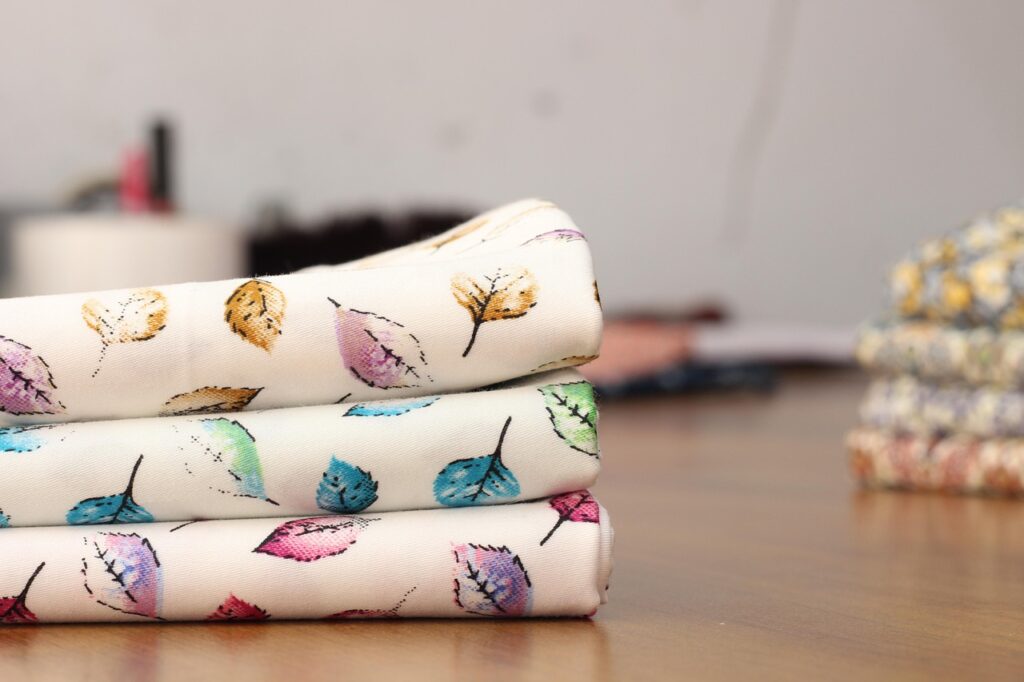
Textile printing is a method of applying designs, patterns, or motifs into fabric surfaces using dyes, pigments, or other colorants. This process allows for intricate and vibrant designs, transforming plain fabrics into decorative and functional textiles used in fashion, home decor, and industrial applications.
Textile printing has evolved over centuries, incorporating both traditional and modern techniques to achieve a wide variety of aesthetic and functional results.
- pre-treatment of fabric,
- preparation of colours,
- preparation of printing paste,
- impression of paste on fabric using printing methods,
- drying of fabric,
- fixing .
Preparation of cloth for printing:-The preparation of cloth for printing involves several key steps to ensure that the fabric absorbs dyes or pigments evenly, retains the design well, and achieves a high-quality finish. Below are the main steps involved.
1. Singeing
- Removes loose fibers, lint, and fuzz from the surface of the fabric.
- Done by passing the fabric over a flame or hot metal plates to burn off protruding fibers.
- Improves smoothness and prevents printing defects.
2. Desizing
- Removes sizing agents (such as starch, gelatin, or resins) applied during weaving.
- Sizing materials can interfere with dye absorption and printing.
- Carried out using enzymes or chemicals like acids and alkalis.
3. Scouring
- Eliminates natural oils, waxes, and impurities present in the fabric.
- Typically done using alkaline solutions like sodium hydroxide.
- Ensures better dye penetration and fabric softness.
4. Bleaching
- Whitens the fabric by removing natural coloration or stains.
- Usually performed with hydrogen peroxide, sodium hypochlorite, or other bleaching agents.
- Enhances the brightness of the final print.
5. Mercerization
- Involves treating cotton fabrics with concentrated sodium hydroxide.
- Increases luster, strength, and dye affinity.
- Enhances fabric smoothness for better printing results.
6. Washing and Neutralization
- After bleaching and scouring, fabrics are washed thoroughly.
- Acids (like acetic acid) are used to neutralize any residual alkali.
- Ensures the fabric is in a neutral state before printing.
7. Drying and Smoothing
- The fabric is dried using stenters or rollers.
- Ensures a uniform surface, preventing wrinkles or distortions during printing.
Types Of Printing
There are several types of textile printing techniques used to create patterns and designs on fabrics. These can be categorized based on the method and materials used. Here are the main types:
Direct Printing
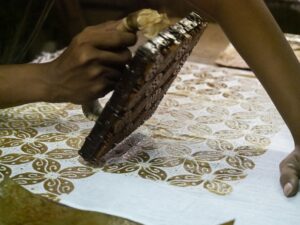
Block Printing:-It is a traditional printing technique in which carved wooden blocks are dipped in dye and pressed onto fabric. The blocks are usually made of wood, rubber, or linoleum and used to transfer ink or dye onto a surface like fabric or paper. This method has been widely used in various cultures for centuries, particularly in textile and book printing.
Screen Printing –Screen printing is a printing technique where ink is pushed through a mesh stencil (screen) onto a substrate, such as fabric, paper, or plastic. It’s widely used for making t-shirts, posters, banners, and other materials.
How It Works
- Design Creation – A digital or hand-drawn design is prepared and transferred onto a transparent film.
- Screen Preparation – A mesh screen is coated with a light-sensitive emulsion and then exposed to light with the design film placed on it. The areas blocked by the design remain unexposed and can be washed away, creating a stencil.
- Printing Process – The screen is placed on the substrate, ink is applied, and a squeegee is used to push the ink through the mesh stencil onto the material.
- Curing – The printed item is heated to cure the ink, making it durable and long-lasting.
- Batik Printing – Batik printing is a traditional textile art form that involves applying wax-resistant dyeing techniques to fabric. This method is widely practiced in countries like Indonesia, Malaysia, India, and Africa, with Indonesia being the most famous for its intricate and culturally significant batik designs.
Process of Batik Printing
- Designing the Pattern
- Artists create unique designs inspired by nature, folklore, and cultural motifs.
- Traditional batik features geometric, floral, or symbolic patterns.
- Applying Wax (Resist Process)
- Melted wax (beeswax or paraffin) is applied using a tjanting (canting) tool for fine details or a cap (copper stamp) for repetitive patterns.
- The wax covers specific areas to resist dye penetration.
- Dyeing the Fabric
- The fabric is dipped in dye, and only the unwaxed areas absorb color.
- For multicolored designs, the process is repeated with new wax layers and different dyes.
- Wax Removal
- The fabric is boiled or scraped to remove wax, revealing the final design.
- Some artisans leave cracks in the wax, creating a signature “crackled” effect
Heat Transfer Printing
Heat transfer printing is a method of applying designs to fabrics or other surfaces using heat and pressure. It is commonly used in textile printing, custom apparel, and promotional items.
- Sublimation Printing – Uses heat to turn dye into gas, which bonds with polyester fabric.
- Thermal Transfer Printing – Designs are printed on paper and then transferred to fabric using heat.
Digital Printing
A modern technique where designs are printed directly onto fabric using inkjet printers.
- Inkjet Printing – High-resolution printing for detailed and complex designs.
- Laser Printing – Uses laser technology to create prints with precision.
Discharge Printing:-
What is Discharge Printing?
Discharge printing is a screen-printing technique where a discharge agent removes or bleaches the dye from a dyed fabric, revealing the original or a newly applied color. This method creates soft, vibrant, and breathable prints, especially on dark-colored garments.
How Discharge Printing Works
- Fabric Selection – Works best on 100% cotton fabrics with reactive dyes.
- Application of Discharge Ink – A water-based ink mixed with a discharge agent (usually zinc formaldehyde sulfoxylate).
- Heat Activation – The print is cured at high temperatures (around 320°F or 160°C), triggering the discharge process.
- Final Result – The fabric’s dye is removed or replaced, creating a soft, nearly imperceptible print.
Types of Discharge Printing
- Clear Discharge – Simply removes the fabric dye, leaving a natural or white base.
- Colored Discharge – Adds pigments to the discharge ink, replacing the removed dye with a new color.
Advantages
- Soft-hand feel (no thick ink layer).
- Vibrant prints, especially on dark fabrics.
- Durable and breathable designs.
Disadvantages
- Limited to fabrics with reactive dyes (not effective on polyester or blends).
- Chemicals can be harsh, requiring proper ventilation and safety measures.
- Slight color inconsistencies due to variations in fabric dye composition.
Rotary Screen Printing
A continuous process where cylindrical screens apply different colors on fabric rolls.Rotary Screen Printing is a textile and industrial printing technique that uses cylindrical screens to apply patterns onto fabrics. It is commonly used for high-speed, large-scale production of textiles, wallpapers, and packaging materials.

How It Works:
- Screen Preparation: Cylindrical mesh screens (usually made of nickel) are engraved with the desired pattern. Each color in a design needs to be printed using a separate screen. In screen printing, a different stencil (or screen) is used for each color, allowing the printer to layer each color on top of the others to create the final design.
- Ink Application: Ink or dye is placed inside the rotating screens.
- Printing Process: As the material moves under the rotating screens, a squeegee inside the cylinder forces the ink through the open areas of the screen onto the substrate.
- Drying & Fixation: The printed material passes through a dryer or heat-set unit to cure the ink or dye.
Advantages of Rotary Screen Printing:
- High-Speed Production: Capable of printing large volumes efficiently.
- Continuous Printing: Unlike flatbed screen printing, rotary printing allows seamless patterns without breaks.
- Multi-Color Printing: Different screens can be used to apply multiple colors in a single run.
- Versatile Applications: Suitable for textiles, wallpapers, packaging, and even ceramics.
Limitations:
- High Initial Cost: Requires expensive screens and setup.
- Limited Design Changes: Once screens are prepared, design modifications can be costly.
- Not Ideal for Small Runs: Best suited for mass production rather than short-run custom printing.
The development of eco-friendly dyes and sustainable printing technologies has significantly reduced the environmental impact of textile printing. Innovations in digital printing have enabled precise and intricate designs with minimal waste, making it a preferred choice for modern manufacturers.
In conclusion, textile printing plays a crucial role in fashion, home décor, and industrial applications. As technology continues to advance, the industry is moving towards more efficient, sustainable, and high-quality printing solutions to meet the demands of consumers and environmental concerns.