
A sewing machine is used to stitch fabric and other materials together using thread. It automates the sewing process, making it faster and more precise than hand sewing. Sewing machines are commonly used in garment making, upholstery, and crafting.
The first recorded idea of a sewing machine dates back to 1755, when Charles Frederick Wiesenthal, a German engineer, received a British patent for a needle designed for mechanical stitching.In 1790, Thomas Saint, an English inventor, designed a machine for leather and canvas sewing, but there is no evidence that it was ever built.In the 1850s, Isaac Singer improved Howe’s design by adding a foot pedal (treadle) and continuous stitching. Singer’s machines became very popular, leading to legal battles over patents.By the late 1800s, sewing machines were mass-produced, with companies like Singer, Wheeler & Wilson, and Grover & Baker dominating the market.
There are two types of sewing machines, including:
- Mechanical Sewing Machines – Operated manually with dials and knobs.
- Electronic Sewing Machines – Use buttons and LCD screens for settings.
Mechanical Sewing Machines:- A mechanical sewing machine is a basic type of sewing machine which is operates using physical power, like knobs, dials, and levers instead of computerized or electronic functions. It is often preferred by beginners and those who enjoy simple, durable, and budget-friendly machines. The speed is controlled by pressing a foot pedal—a simple design with essential functions. Fewer electronic parts mean less risk of malfunction. Cheaper than computerized models.
Electronic sewing machine:- An electronic sewing machine is a modern sewing machine that combines mechanical parts with electrical components, making sewing easier and more efficient. It typically features buttons, dials, and sometimes an LCD screen for stitch selection and settings. Runs on electricity with a built-in motor.Offers multiple stitch options, including decorative and utility stitches. Usually has automatic or semi-automatic buttonhole stitching. Can be customized with simple dials or buttons. Some models allow you to adjust sewing speed for precision. More stitch options and automatic features make sewing faster. Smooth stitching with better tension control. Mainly used in the garment industry for more production. Singer, Puf, Pegasus, Juki, Brother, and Seruba is the most popular sewing machine manufacturing companies.
In the garment industry, there are different types of sewing machine
- Lock Stitch Machine.
- Chain Stitch Machine.
- Over Lock Machine.
- Zig-Zag Stitching Machine.
- Flat Lock Machine.
- Blind Stitch Machine.
- Button Holing Machine.
- Button Attaching Machine.
- Bar tack Machine.
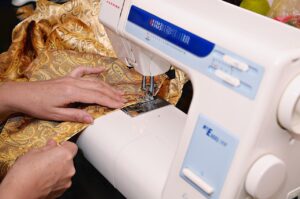
Lock Stitch Machine:- A lockstitch sewing machine is a type of sewing machine that produces a secure and durable stitch by interlocking two threads—one from the needle (top thread) and one from the bobbin (bottom thread). This is the most common type of stitch used in sewing, found in both domestic and industrial machines. A typical lock stitch sewing machine operates at a speed of around 5000 RPM (revolutions per minute), meaning it can sew up to 5000 stitches per minute depending on the model and fabric being used.
The mechanism of a lockstitch machine involves the needle passing through the fabric, pulling the top thread down, while the bobbin thread catches it with a hook mechanism. This forms a tight, clean stitch on both sides of the fabric, preventing unraveling.
Lockstitch machines are known for their precision and durability. They produce neat and professional stitches, making them ideal for garment making, upholstery, and quilting. Many industrial models can handle heavy fabrics like denim and leather.
Common features of lockstitch machines include adjustable stitch length, reverse stitching for reinforcement, and automatic thread cutting in advanced models. Brands like Singer, Brother, Juki, and Janome manufacture popular lockstitch machines.
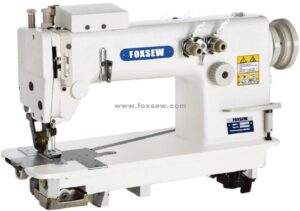 Chain Stitch Machine:- A chain stitch sewing machine is a type of sewing machine that creates a flexible and decorative stitch using a single thread or multiple threads, forming a looped chain-like pattern on the underside of the fabric. Unlike a lockstitch machine, which uses both a top and bobbin thread, a chain stitch machine relies on a looper mechanism to interlock the stitches.
The chain stitch is known for its stretchability, making it ideal for sewing knit fabrics, decorative embroidery, and temporary stitching in garment manufacturing. It is commonly used in hemming, decorative seams, and stitching on stretchy materials like t-shirts and sportswear. A typical chain stitch machine operates at a speed of around 1,800 to 5,000 RPM (revolutions per minute), although this can vary depending on the specific model and manufacturer; some high-speed chain stitch machines can reach up to 6,000 RPM.
There are various types of chain stitch machines, including single-thread and multi-thread models. Some industrial chain stitch machines, such as those made by Juki, Singer, and Brother, are widely used in mass production due to their high-speed capabilities.The RPM of this machine
Overall, chain stitch machines are essential in garment manufacturing, offering both functional and decorative stitching for various fabric types.
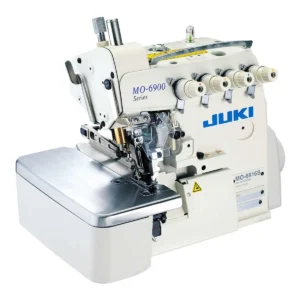 Over Lock Machine:- An overlock machine, commonly known as a serger, is a specialized sewing machine that trims the fabric edge while simultaneously enclosing it with thread to prevent fraying. It uses multiple threads (typically 3, 4, or 5) and loopers instead of a bobbin to create strong, stretchable, and clean edge finishes.
Overlock machines are widely used for seam finishing, ensuring fabrics do not unravel.Industrial overlock machines can sew at high speeds, making them ideal for mass production.Uses multiple threads (3, 4, or 5) to create different stitch types, such as a 3-thread overlock for lightweight fabrics or a 5-thread overlock for strong, durable seams.Sewing and finishing edges of garments like t-shirts, leggings, and lingerie.Joining fabric pieces with durability and flexibility.Popular brands like Juki, Brother, Singer, and Janome manufacture both domestic and industrial overlock machines. Due to their efficiency and versatility, these machines are essential in the fashion and textile industry.
Zig-Zag Stitching Machine:- A zigzag stitching machine is a type of sewing machine that can create stitches in a side-to-side motion, forming a zigzag pattern instead of a straight stitch. This machine is versatile and widely used in garment construction, decorative stitching, and reinforcement of seams.Unlike a lockstitch machine that only produces straight stitches, a zigzag machine moves the needle left and right, creating a zigzag pattern.Most machines allow users to modify the width and length of the zigzag stitch, making it suitable for various applications.Zigzag stitches add extra strength to seams and prevent fabric from unraveling, making them ideal for buttonholes, appliqué work, and stretch fabric sewing.Works well with stretchy fabrics, as the zigzag pattern allows flexibility without breaking the stitches.These machines are essential for both professional tailors and home sewists who need a versatile and durable stitching option.
 Flatlock machine:- A flatlock machine is a specialized sewing machine used to create flat, seamless, and stretchable stitches, commonly found in activewear, swimwear, and underwear. It is designed to join two fabric edges with minimal bulk, making the seams comfortable and aesthetically appealing.Typically uses two to six threads, with loopers and needles working together to form secure, flexible stitches.Ideal for knit fabrics and garments that require elasticity, like sportswear and leggings.Can be used for both decorative and functional stitching, depending on the desired look.Flatlock machines are essential in modern garment production, ensuring professional, high-quality seam finishes in stretchable and performance fabrics.
Blind Stitch Machine:- A blind stitch machine is a specialized sewing machine designed to create nearly invisible stitches, primarily used for hemming garments and fabrics without visible topstitching. It is widely used in tailoring, dressmaking, and upholstery industries to achieve a clean and professional finish.The machine sews a stitch that only catches a few fibers of the fabric, making the seam barely visible from the right side.Most blind stitch machines use a single-thread chain stitch, eliminating the need for a bobbin and allowing some elasticity.Many blind stitch machines feature a curved needle, which helps create precise, hidden stitches. Users can modify the stitch depth to suit different fabric thicknesses. Blind stitch machines are essential in professional garment production, providing seamless hems and a high-end, polished look to clothing and fabric projects.
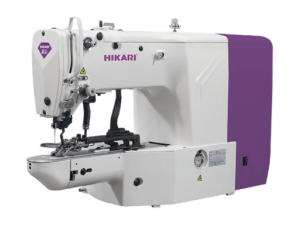 Button Holing Machine:- A buttonholing machine is a specialized sewing machine designed to create precise and durable buttonholes in garments. It automates the process of cutting and stitching buttonholes, ensuring uniformity and strength. The machine sews the buttonhole in a set pattern, including straight, keyhole, or round-end buttonholes. Users can modify the buttonhole length, width, and stitch tightness based on fabric type. Some machines feature an automatic cutting system that precisely cuts the buttonhole after stitching. Domestic machines often have a four-step buttonhole function, while industrial models offer a one-step automatic feature for efficiency. Domestic machines often have a four-step buttonhole function, while industrial models offer a one-step automatic feature for efficiency.
Button-Attaching Machine:- A button-attaching machine is a specialized sewing machine designed to securely sew buttons onto garments, upholstery, and accessories with precision and speed. It automates the button-sewing process, ensuring strong and consistent attachment. The machine stitches buttons in various patterns, such as parallel (two-hole) or cross-stitch (four-hole). Users can control stitch density and thread tension to match fabric and button types. Industrial models can sew hundreds of buttons per hour, increasing efficiency in mass production. Some machines include a thread trimming and knotting function, preventing buttons from coming loose. This machine is essential in the apparel industry, ensuring fast, uniform, and durable button attachment for high-quality garment production.
Bar tack Machine:- A bar tack machine is a specialized sewing machine designed to reinforce specific points on garments and fabrics by creating a dense, short zigzag stitch known as a bar tack. It enhances the durability of stress points, preventing fabric from tearing under pressure. The machine sews a tight zigzag pattern over a short length to strengthen fabric areas subjected to stress.Users can modify the bar tack size based on fabric thickness and application. Industrial models can produce bar tacks quickly and consistently, making them essential for mass garment production. Many machines include a cutting function to ensure clean finishes. Used in backpacks, safety harnesses, tents, and sportswear for added durability.
Whether you’re a hobbyist at home or part of a large-scale garment manufacturing process, understanding the different types of sewing machines and their functions helps optimize productivity and craftsmanship. With technological advancements, modern sewing machines are now more versatile, faster, and precise, making them indispensable tools in creating everything from everyday clothing to specialized, high-performance gear. As industries continue to evolve, sewing machines remain at the heart of fabric construction, driving innovation and tradition in textile production.