What Is Loom ?
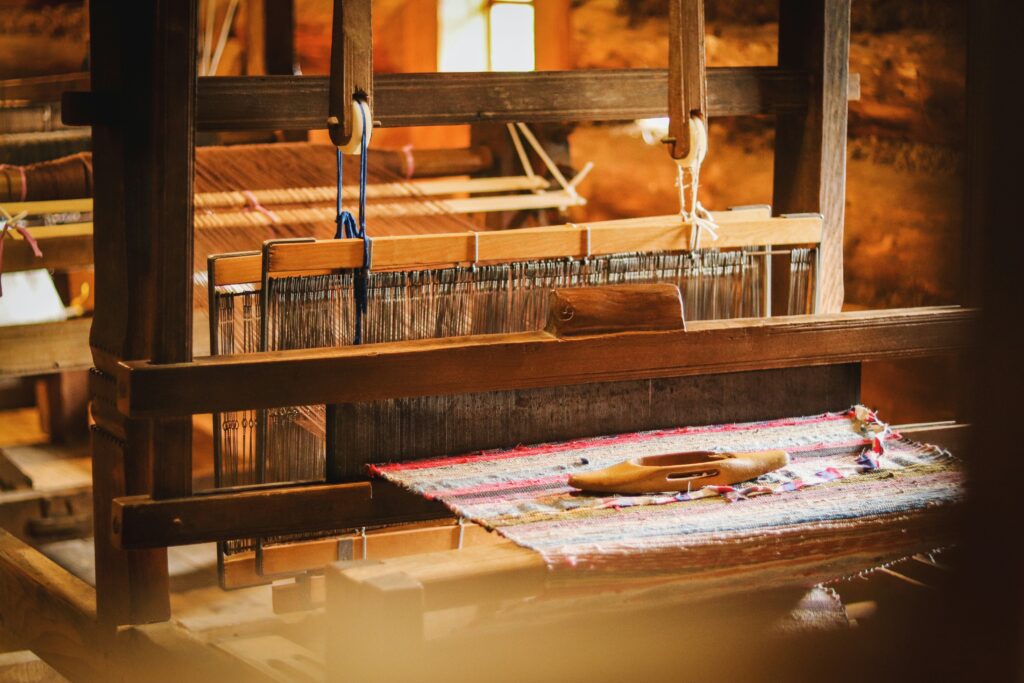
The loom is one of the most remarkable inventions in human history, a cornerstone of the textile industry that has evolved over thousands of years. From ancient handlooms to today’s high-tech, computerized weaving machines, the loom remains at the heart of fabric production.
The primary function of a loom is to interlace two sets of threads: the warp (longitudinal) and the weft (horizontal), creating woven fabric. This seemingly simple mechanism has given rise to various textiles, from the softest cotton to the most intricate brocades. The history of looms can be traced back to ancient civilizations, with evidence of weaving dating as far back as 5000 BCE. Early looms were rudimentary and operated entirely by hand, but they laid the foundation for more sophisticated versions.
The Industrial Revolution marked a turning point for loom technology. The invention of the power loom in the late 18th century mechanized the weaving process, drastically increasing production capacity and transforming the textile industry. This innovation enabled the mass production of fabrics, making textiles more accessible and affordable.
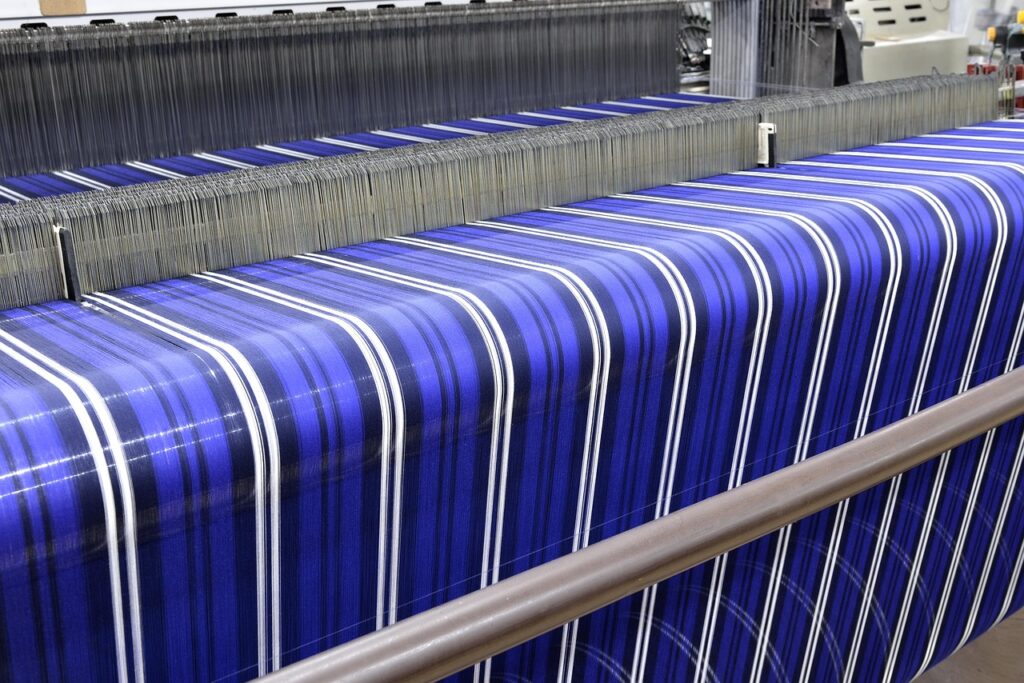
Today, modern looms are marvels of engineering, capable of producing intricate patterns and high-quality textiles at incredible speeds. Air-jet and water-jet looms, for instance, use air and water pressure to propel the weft threads, achieving efficiency and precision. Jacquard looms, now computerized, create elaborate designs once made painstakingly by hand.
Types of Loom:
- Hand Loom.
- Power Loom.
- Jacquard Loom.
- Air – Jet Loom.
- Water – Jet Loom.
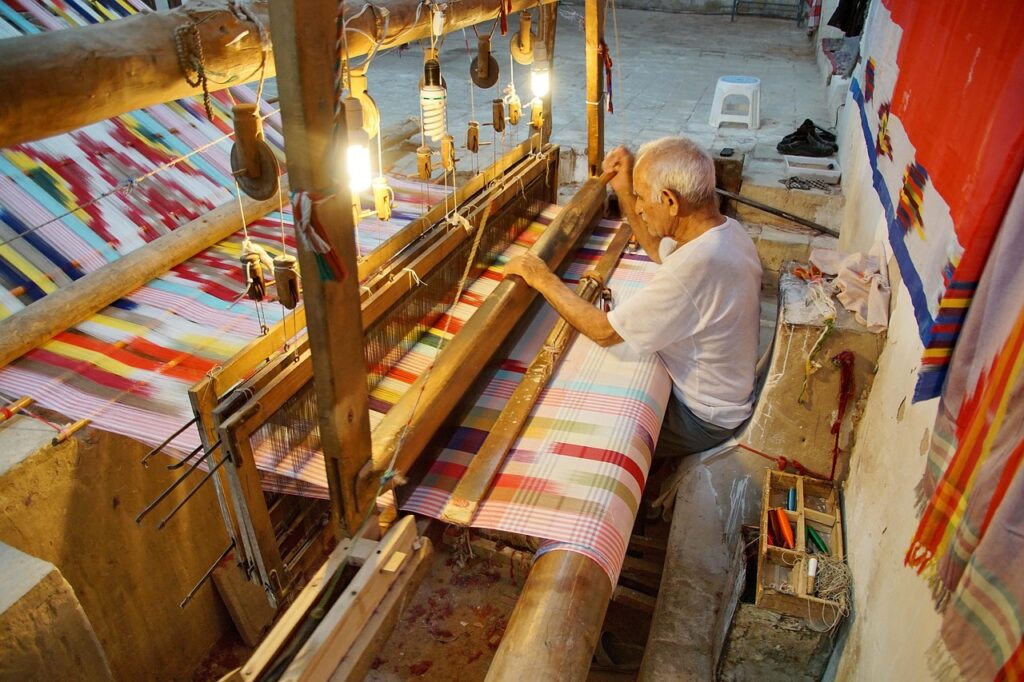
Hand Loom :-A handloom is a traditional device used for weaving fabric, where the weaver manually operates the loom, unlike modern machines that are automated. It consists of a frame, a set of warp threads (vertical threads), and a shuttle used to carry the weft threads (horizontal threads) across the warp. Handlooms are typically powered by the weaver’s foot or hand, making them energy-efficient and eco-friendly.
Handloom weaving is an ancient practice with deep cultural significance in many parts of the world, especially in countries like India, China, and parts of Africa. It allows for the creation of intricate patterns and textures in textiles, which can’t always be replicated by machine looms. The fabric produced on a handloom often has a unique, handcrafted appeal and can be used for a variety of products such as clothing, scarves, rugs, and tapestries.
Power Loom:- A power loom is a mechanized version of the traditional handloom, designed to speed up the weaving process by using mechanical power, typically driven by electricity, steam, or water. Unlike a handloom, where the weaver manually operates the loom, a power loom is powered by motors or other external sources, automating many steps of the weaving process.
Here’s a breakdown of the key features and workings of a power loom:
- Warping: Like a handloom, a power loom sets up vertical threads (warp), which are stretched tightly across the loom.
- Weft Insertion: The shuttle, which holds the weft thread (horizontal threads), is automatically moved back and forth across the warp by the loom’s mechanical systems. This is done at high speeds, which significantly reduces the time needed to complete a piece of fabric.
- Beat-Up Mechanism: The power loom has an automated mechanism that pushes the weft threads tightly together to form a consistent weave, a process that would otherwise require manual labor on a handloom.
- Speed and Efficiency: Power looms can weave fabric much faster than handlooms, which makes them more efficient and cost-effective for large-scale production. This is one of the reasons power looms dominate the textile industry today.
- Types of Power Looms: There are several types of power looms, such as shuttle looms,shuttleless looms, and jacquard looms, each designed for different weaving techniques and types of fabric.
The introduction of power looms revolutionized the textile industry during the Industrial Revolution by significantly increasing production rates. While they led to the decline of traditional handloom weaving in many areas, power looms remain an essential part of modern fabric production, particularly for mass production and lower-cost textiles.
Jacquard loom :- The Jacquard loom, invented by Joseph Marie Jacquard in 1804, is one of the most revolutionary advancements in textile machinery. It introduced the concept of automatic patterning in weaving, allowing complex, intricate designs to be woven into fabric without manual intervention. What set the Jacquard loom apart was its use of punched cards to control the lifting of individual warp threads. This system enabled the loom to create highly detailed and varied patterns, such as florals, geometric shapes, or even portraits, that would have been impossible to achieve with traditional handlooms or basic power looms.
The loom’s innovation lies in its punch card system, which functioned similarly to a binary code, instructing the loom to lift specific warp threads according to the pattern. Each card in the system represented a line of the design, and the sequence of cards controlled the pattern’s complexity. This made the Jacquard loom the precursor to modern computing, influencing the development of programmable machines and digital technology.
Jacquard weaving is highly regarded for its precision and artistic possibilities. It is still used today in the production of luxurious fabrics like brocades, damasks, and tapestries, where complex patterns are a key part of the fabric’s design, blending both art and technology in the textile world.
Air-Jet Loom:- The Air-Jet loom is a modern and innovative weaving machine that uses high-pressure air to propel the shuttle across the warp threads, replacing traditional mechanical shuttle systems. This loom design is a significant advancement over the older shuttle looms, offering greater speed, efficiency, and versatility in fabric production. Air-Jet looms are particularly suitable for weaving light to medium-weight fabrics, especially when high-speed production is required.
In an Air-Jet loom, the shuttle is propelled through the shed (the gap between the raised warp threads) by a blast of air generated by nozzles strategically placed along the loom. This system allows the shuttle to travel at much higher speeds compared to mechanical looms, significantly increasing the weaving rate. The air-powered shuttle also enables the loom to handle a wider variety of yarns and fabrics, including delicate fibers and thicker yarns.
Air-Jet looms are known for their low noise levels and minimal wear and tear compared to other loom types. They also require less energy than water-jet looms and are more cost-effective to operate. These looms are widely used in industries where speed, precision, and high production volumes are essential, such as in the production of home textiles, garments, and technical fabrics. Their efficiency and ability to produce high-quality fabrics quickly have made them a staple in the modern textile industry.
Water-Jet Loom:- A Water-Jet loom is an advanced type of shuttleless loom that uses high-pressure water to propel the shuttle across the warp threads during the weaving process. This technology is particularly suited for weaving smooth, fine, and lightweight fabrics, especially those made from synthetic fibers like nylon, polyester, or silk. The Water-Jet loom is known for its speed, efficiency, and ability to produce high-quality fabrics in large volumes.
In a Water-Jet loom, the shuttle, which carries the weft (horizontal) yarn, is propelled through the warp threads by a controlled jet of water. The water pressure is directed through nozzles that push the shuttle across the loom, enabling rapid insertion of the weft yarn into the warp. This system allows for higher weaving speeds than traditional shuttle looms and reduces mechanical wear, as there is no direct contact between the shuttle and the loom.
Water-Jet looms are particularly effective for creating fabrics with smooth surfaces and fine textures. They are widely used in industries that require high-speed, large-scale fabric production, such as in the manufacturing of textiles for clothing, upholstery, and industrial applications. However, water-jet looms are limited in their ability to handle natural fibers like cotton and wool, as the water can damage these materials. Despite this limitation, their speed, reduced noise, and ability to work with synthetic fibers make them a valuable asset in the modern textile industry.
In conclusion, looms, whether hand-operated or machine-driven, have played a pivotal role in the evolution of the textile industry. From the intricate craftsmanship of handlooms to the high-speed efficiency of modern machines like Jacquard, Air-Jet, and Water-Jet looms, each type of loom offers unique advantages tailored to different fabric production needs. Handlooms emphasize artistry and tradition, creating distinctive, high-quality textiles, while power looms and their advanced counterparts enable mass production, meeting the demands of modern industries.